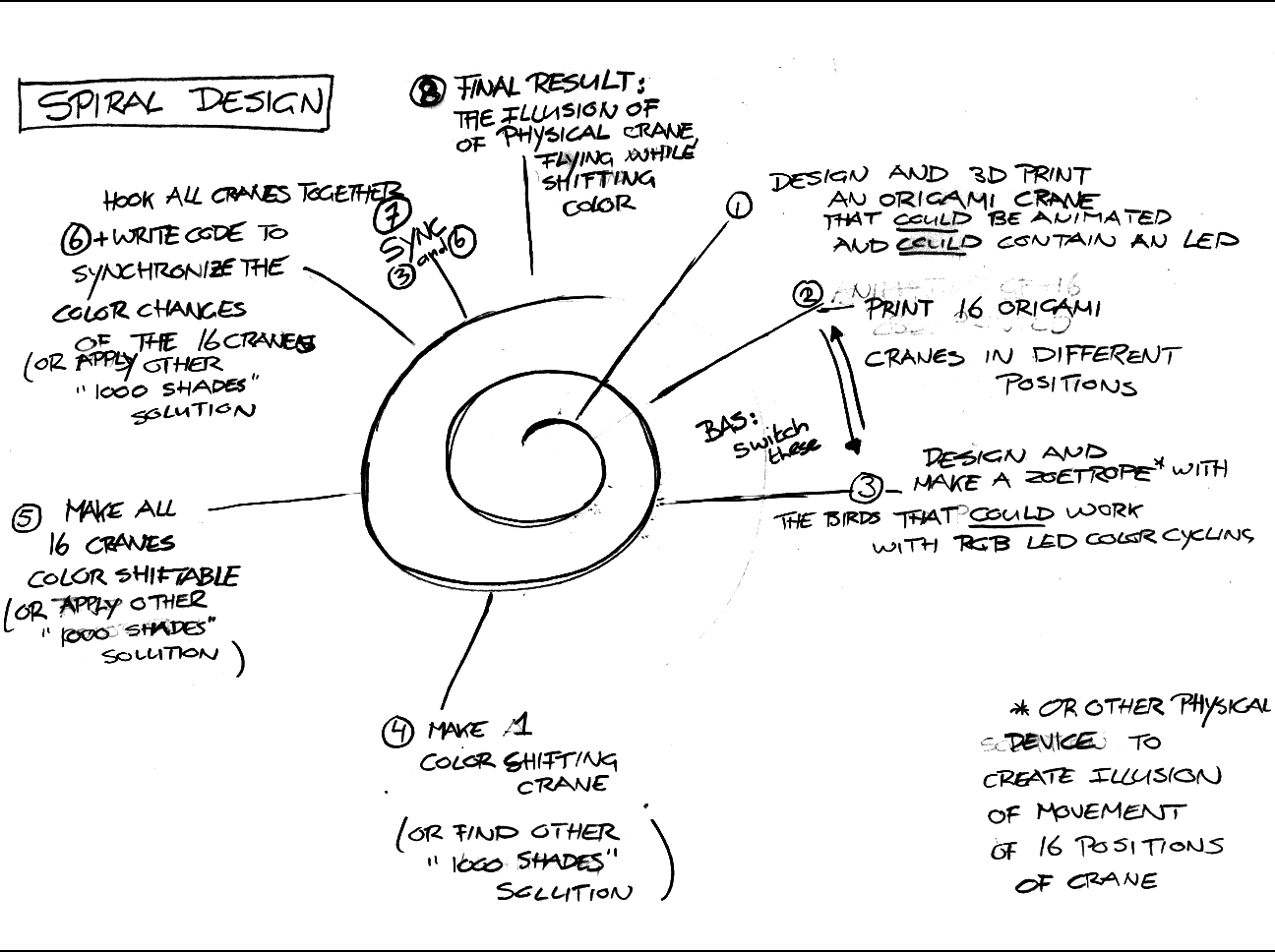
1.1 Spiral Design
First version of a Spiral Design for my final project. Minimal viable product: a zoetrope with "flying" 3D printed cranes. Wow version: a zoetrope with color shifting "flying" 3D printed cranes.
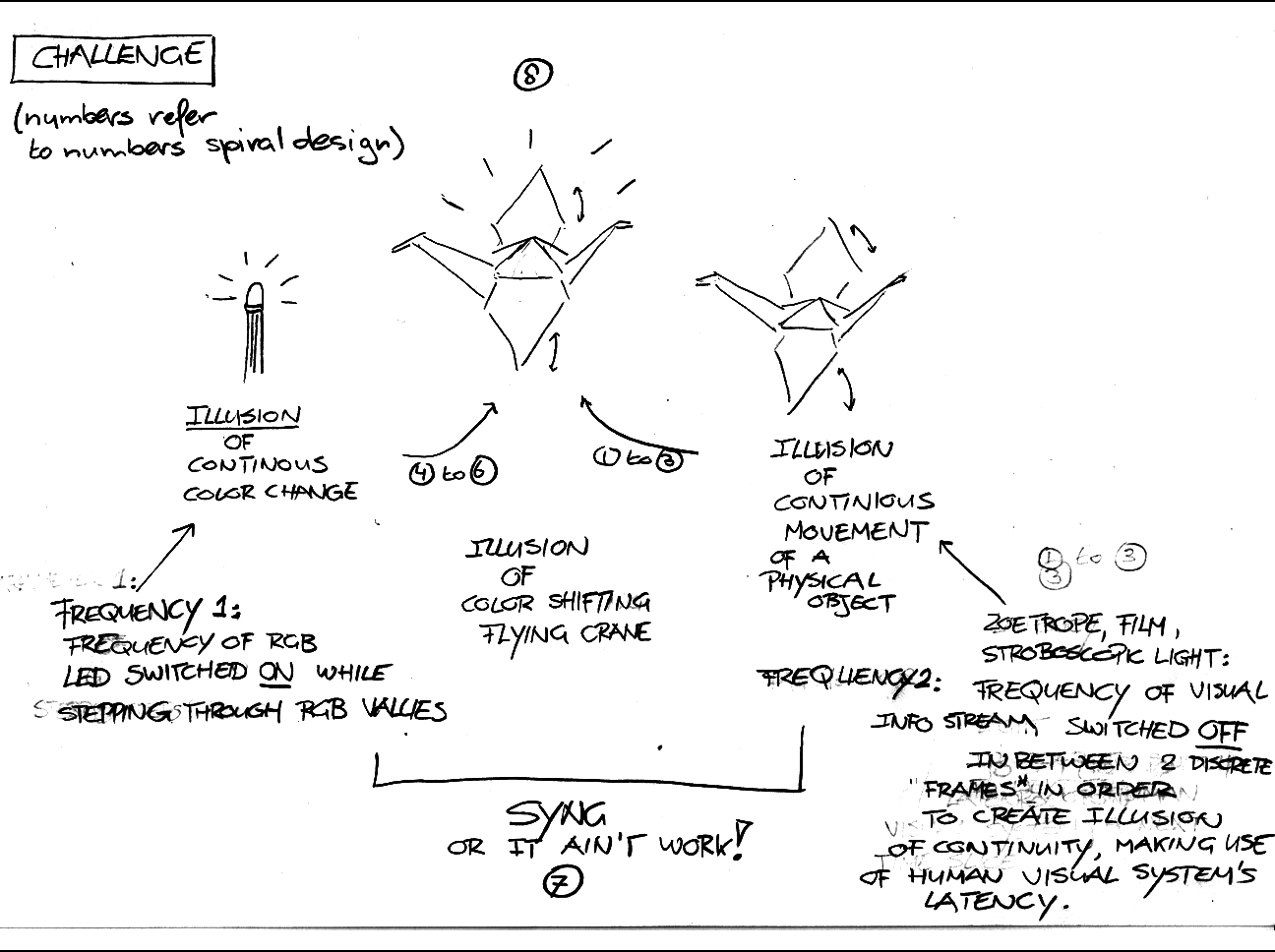
1.2 Challenge
The big challenge for the Wow version: how to sync the components involved in creating the illusion of continious color change (Frequency 1) and the ones involved in creating the illusion of continious movement (Frequency 2) in order to create the illusion of a color shifting flying crane.
2. Inspiration
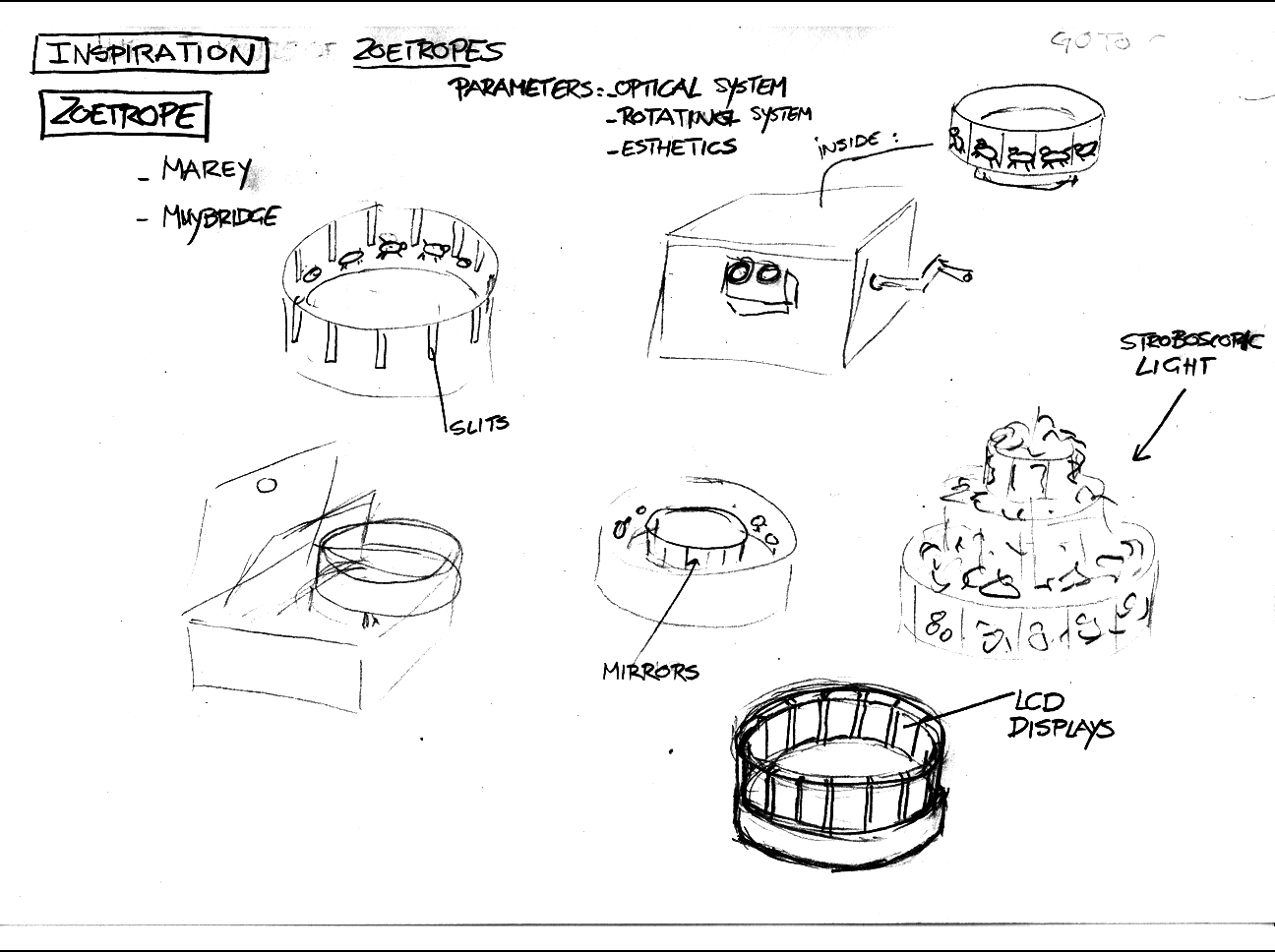
2.1 Zoetropes
Various types of zoetropes and comparable devices exists, all making use of the latency in the human visual system to create the illusion of movement. By presenting a series of static images, alternated with a status "no visual information", the human visual system perceives motion. In a classical zoetrope this alternation was created by the slits in the black cylinder.The nowadays popular 3D printed versions (like the famous All Things Fall) use stroboscopic light to trick the visual system.
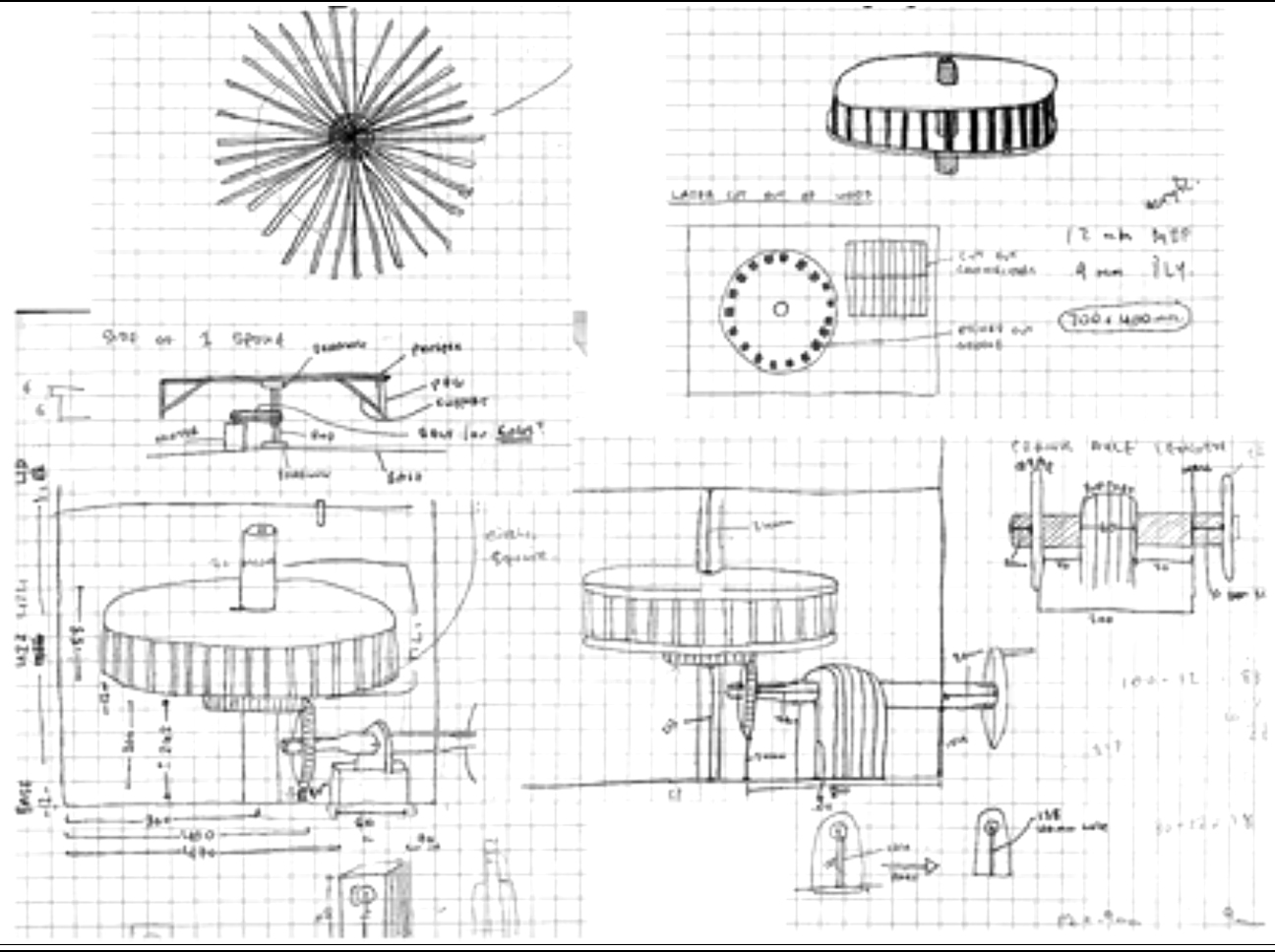
2.2 Zoetrope Mechanism
To make a zoetrope turn basically there are 2 possibilities: man-operated versus motorized. Looking for inspiration I found this really nice sketch of a man-operated zoetrope mechanism, designed by Emile Drecher (New Zealand).
3. Tests
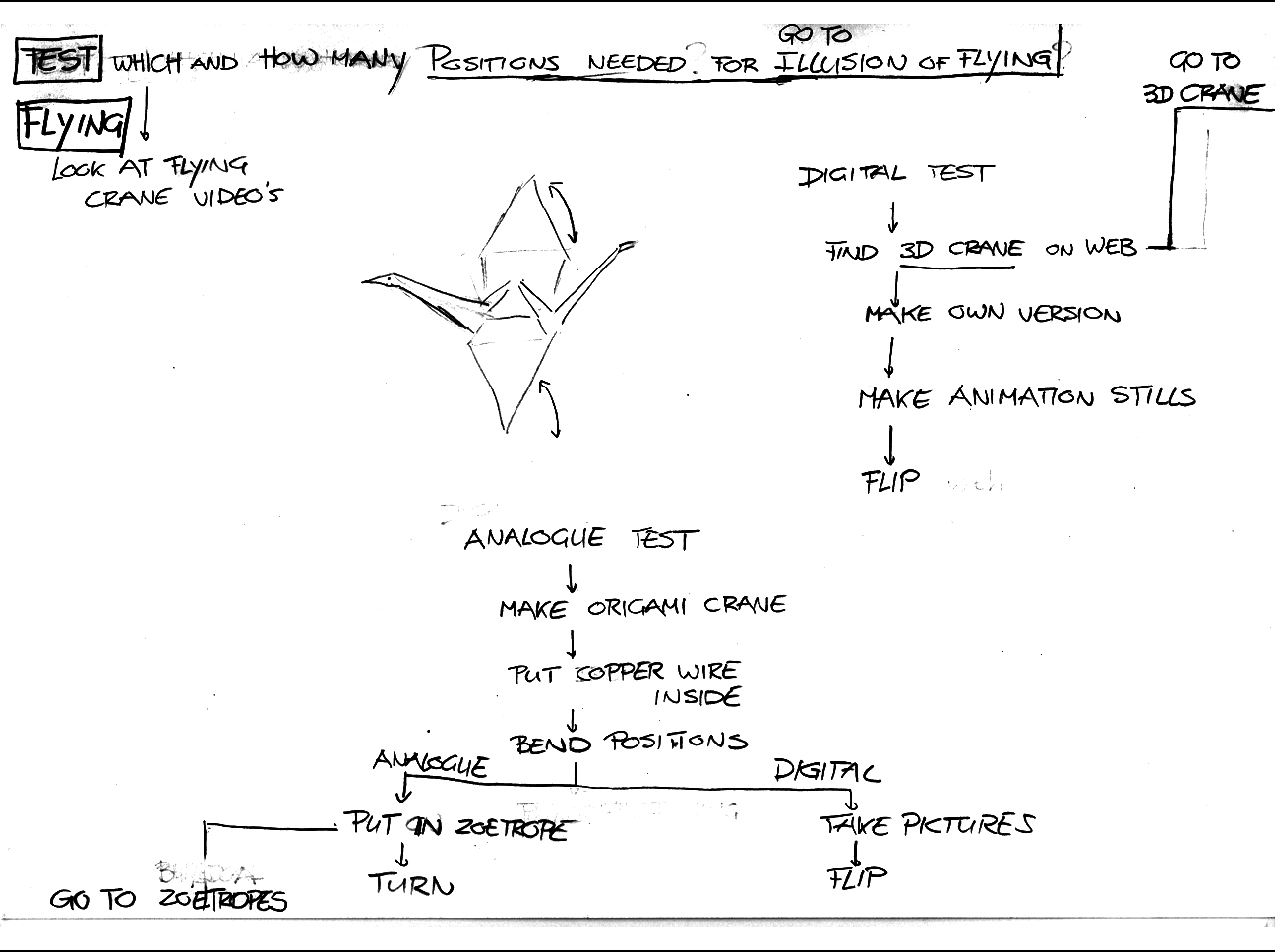
3.1: Flying test
What needs to be tested is how many wing positions are needed to for the illusion of a contious flying movement. This can be tested digitally in an animation program. A quick & dirty first draft might be to photograph a paper bird with (copper wired) bendable wings and use a flip book app or to just draw the bird on a zoetrope strip and watch it in a zoetrope toy.
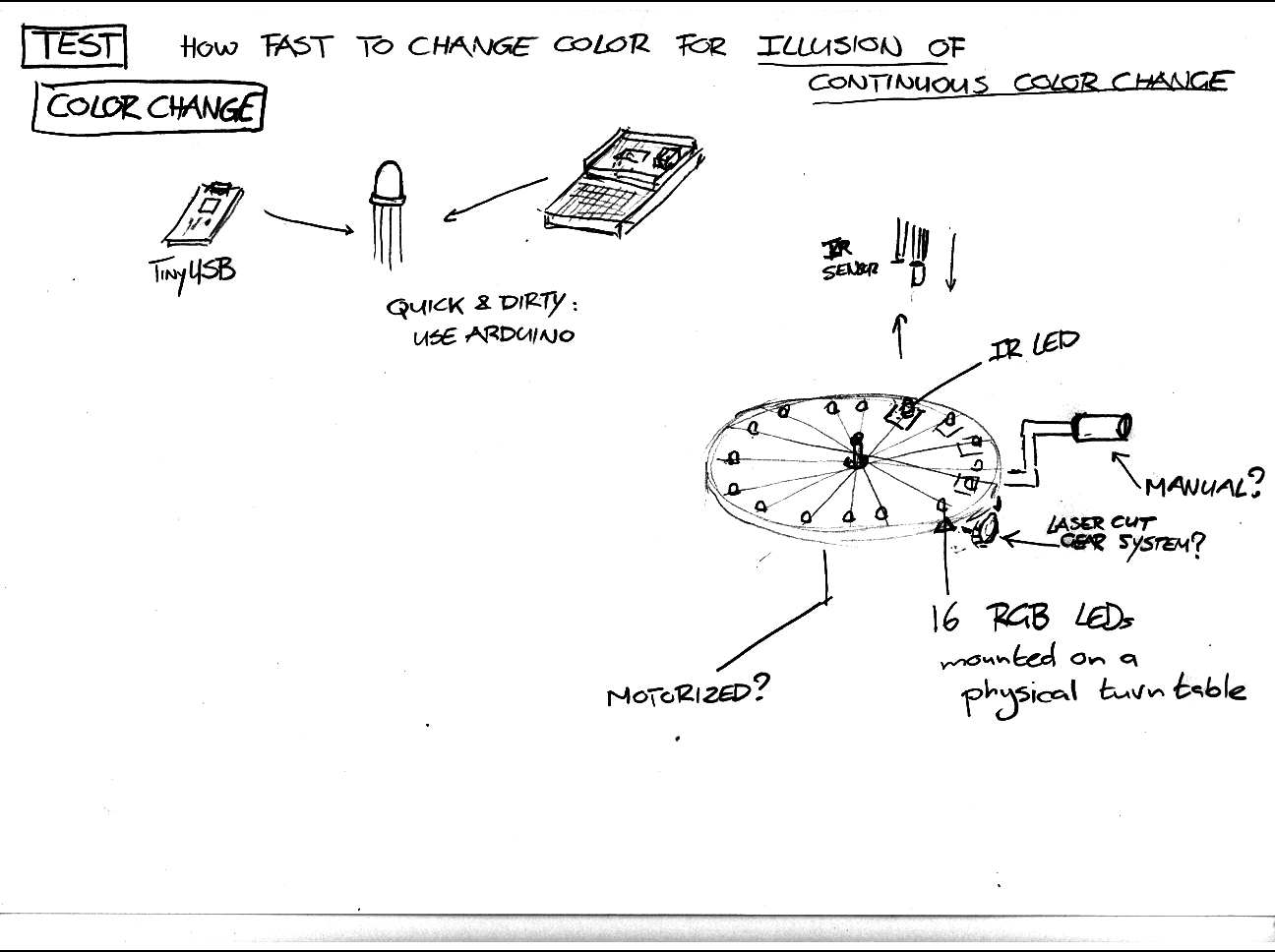
3.2: Color Changing test
What needs to be tested is how to program an RGB LED to create the illusion of a continious change of color. First test: program a static RGB LED with a microcontroller. Next step: test how it works in relation to a turning disk. Various test designs possible (see drawing).
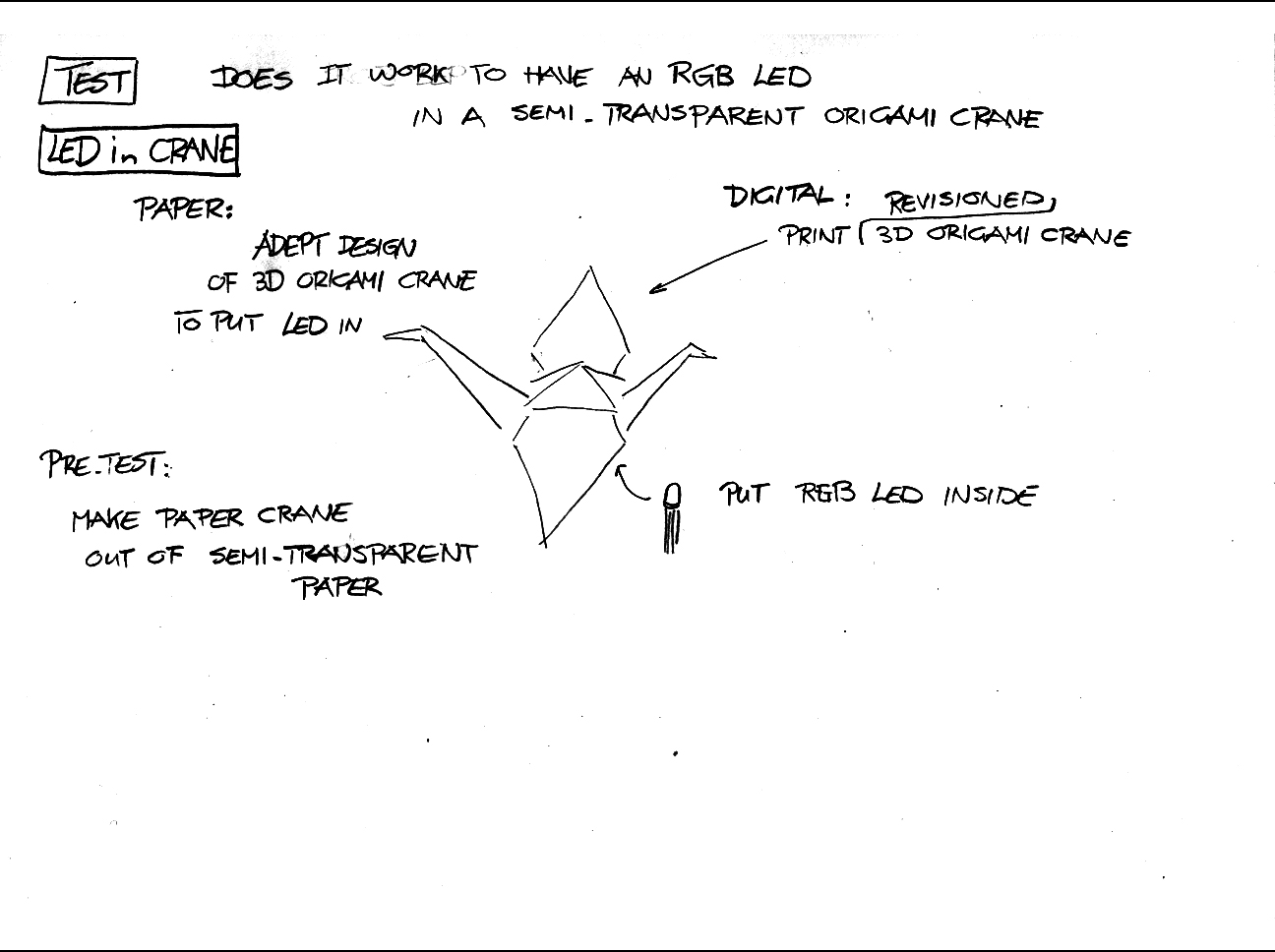
3.3: LED in Crane test
What has to be tested is whether or not it works to put an LED in a semi-transparent 3D printed crane. It might be that this is not a good idea at all and that the illusion of a color shifting origami crane bird can better be created by illuminating the bird form the outside or from the bottom. It might be needed to adapt the design of the bird then.
